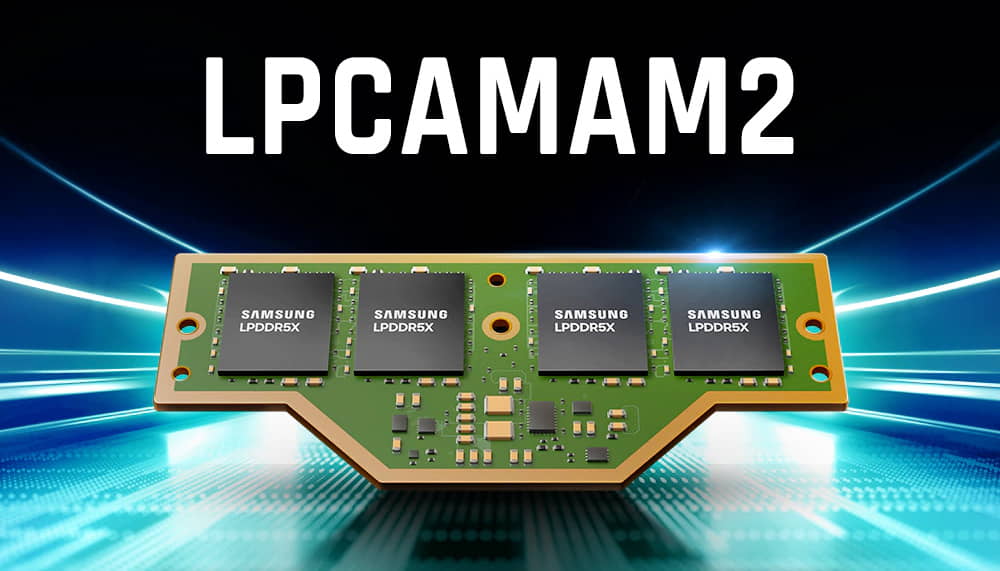
RAM memory is one of the most important components in any computer system. Although processors, graphics cards and SSD drives usually get most of the attention, memory plays a decisive role in overall system performance, multitasking fluidity and the ability to run demanding applications. In this context, the arrival of LPCAMM2 represents one of the most interesting evolutions the memory market has seen in recent years.
For a long time, SO-DIMM modules have been the standard option in laptops, mini PCs and mobile workstations. However, the move towards thinner, lighter and more efficient devices has forced manufacturers to rethink traditional memory design. In many cases, this has led to a clear issue for users: soldered RAM, which prevents upgrades and limits the lifespan of the system.
This is precisely where LPCAMM2 comes into play—a new format that aims to combine the best of both worlds: on one hand, the efficiency, speed and space savings of low-power memory; on the other, the modularity and upgradeability that are so valuable in professional environments. For manufacturers, integrators and advanced users, this is a technology with enormous potential.
What is LPCAMM2?
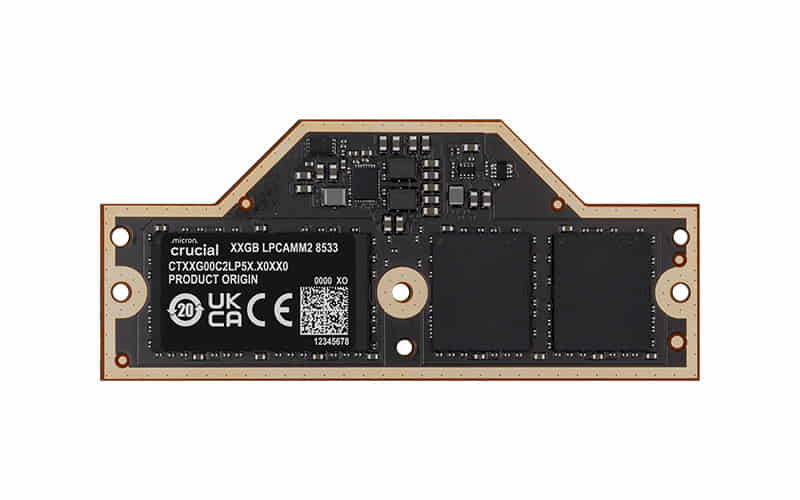
LPCAMM2 is a next-generation memory format designed for compact systems, especially professional laptops, mobile workstations and other platforms where internal space, energy efficiency and performance are key factors. Its name stands for Low Power Compression Attached Memory Module 2, already highlighting two of its main strengths: low power consumption and a much more optimized physical design compared to traditional modules.
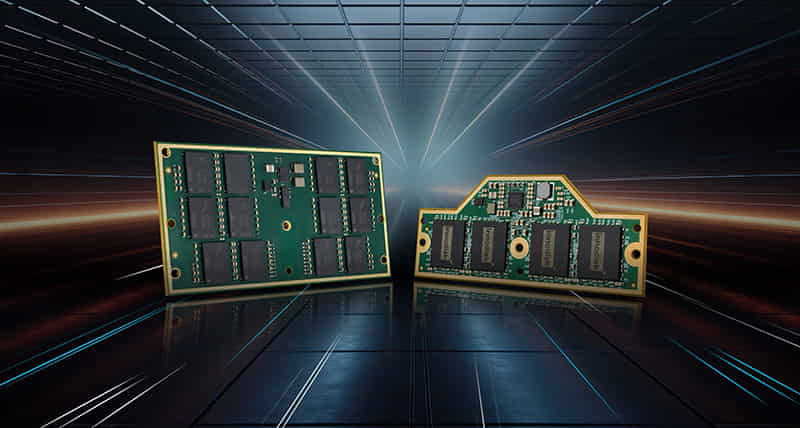
Unlike SO-DIMM memory, which is installed at an angle or vertically in a slot, LPCAMM2 is mounted horizontally on the motherboard. This detail completely changes how memory is integrated into the system. Thanks to this design, module height is reduced, internal space is better utilized, and thinner chassis can be achieved without sacrificing replaceable memory.
In other words, LPCAMM2 is not just a “more modern” memory—it is a solution designed to address a real market need: delivering compact and advanced systems without the limitations of soldered RAM.
Why this new format emerged
The evolution of the laptop market has been shaped by a constant contradiction. On one hand, users demand lighter, thinner, quieter and more efficient devices. On the other, they still value features such as upgradeability, repairability and the ability to adapt system configurations over time.
The problem is that traditional formats take up more space than desired in ultra-thin designs. To solve this, many manufacturers chose to solder memory directly onto the motherboard. This simplifies internal design and reduces thickness, but it has clear drawbacks: if a user purchases a system with insufficient RAM, it cannot be upgraded later; additionally, memory failures can result in more complex and costly repairs.
LPCAMM2 was created to offer a much more balanced alternative. It allows high-performance, low-power memory to be integrated into compact systems while maintaining a modular format that can be replaced or upgraded. This is especially important in the professional sector, where hardware investments must last longer and flexibility is a strategic value.
Main advantages of LPCAMM2 memory
1. More compact design and better space utilization
One of the biggest advantages of LPCAMM2 is its physical format. Being mounted horizontally and occupying less volume than a traditional SO-DIMM solution, it frees up space inside the system. This is particularly useful in high-end laptops, mobile workstations, ultra-portable business devices and industrial designs where every millimeter matters.
This extra space can be used for other components, improved thermal distribution, more efficient cooling systems or even larger batteries. As a result, LPCAMM2 not only improves memory as an individual component but also positively impacts overall system design.
2. Lower power consumption
Another key aspect is its focus on efficiency. LPCAMM2 is designed for low-power memory, which is essential in laptops and mobile devices. Reducing RAM power consumption directly impacts battery life, heat generation and system stability under sustained workloads.
In professional environments, this is especially relevant. A laptop used for engineering, content creation, data analysis or light virtualization requires not only performance but also controlled thermals and reliable autonomy. LPCAMM2 fits perfectly in this scenario.
3. Higher performance and improved signal integrity
The physical design of LPCAMM2 also provides electrical advantages. By optimizing the connection with the motherboard and reducing certain limitations of traditional modules, signal integrity can be improved. This allows higher speeds and more efficient communication between memory and the rest of the system.
In practice, this results in a platform better prepared for modern workloads, where memory bandwidth is increasingly important. Applications such as artificial intelligence, rendering, video editing, simulation, software compilation and intensive multitasking clearly benefit from faster and more efficient memory.
4. Higher capacities in an advanced format
Current market trends show that memory demand continues to grow. A few years ago, 8 GB was sufficient for many users. Today, 16 GB is considered a baseline, 32 GB is common in professional systems, and certain workloads require even higher capacities.
LPCAMM2 is well suited to this reality, as it is designed to support high-capacity configurations in a compact format. This makes it particularly attractive for mobile workstations, development laptops, AI-focused systems and professional software environments handling large datasets and complex projects.
5. Modular and upgradeable memory
This is probably one of its most important advantages from both a professional user and integrator perspective. Compared to soldered RAM, LPCAMM2 restores the ability to upgrade memory without sacrificing a modern and compact design.
This means systems can be purchased with an initial configuration aligned to budget and upgraded later as needs evolve. It also simplifies maintenance, replacement and extends the device lifecycle. In business environments, this can significantly impact total cost of ownership.
Looking for next-generation memory for your projects?
Discover our range of professional RAM solutions, optimized for performance, efficiency and demanding business environments.
LPCAMM2 vs SO-DIMM: key differences
Comparing LPCAMM2 with SO-DIMM helps explain why this new standard is gaining so much attention. SO-DIMM modules have served their purpose perfectly for years, but they belong to a different generation of laptops. Today, manufacturers aim for thinner, more efficient designs with more advanced internal space management.
While SO-DIMM remains a valid and widely used solution, LPCAMM2 offers a more modern approach aligned with current hardware demands. Its design combines low profile, efficiency, performance and modularity, making it a natural evolution for many laptop and mobile workstation manufacturers.
In general terms, these are some of the most important differences:
- Physical format: SO-DIMM uses a traditional slot; LPCAMM2 is installed horizontally.
- Space efficiency: LPCAMM2 enables more compact internal designs.
- Power consumption: LPCAMM2 is designed for low-power memory.
- Performance: the new format is better suited for higher speeds.
- Upgradeability: both can be modular, but LPCAMM2 brings this advantage to systems that previously used soldered RAM.
What types of systems benefit from LPCAMM2
Although it may seem like a technology limited to premium laptops, LPCAMM2 actually has much broader applications. It is especially attractive in scenarios where high performance, energy efficiency, low profile and upgradeability need to coexist.
Some of the systems that benefit the most include:
- Professional laptops for advanced office work, analytics, development or intensive workloads.
- Mobile workstations for CAD, 3D modeling, rendering, video and technical design.
- AI-ready portable systems, where high-speed memory is critical.
- Mini PCs and compact systems with strict space limitations.
- Enterprise platforms where maintenance and future upgrades are key.
It is also a strong differentiator for manufacturers and integrators looking to offer more flexible and future-ready systems. In a market where repairability and scalability are gaining importance again, LPCAMM2 becomes a valuable proposition.

Importance of LPCAMM2 in professional environments
From a business perspective, LPCAMM2 is not just a technical improvement—it has significant practical implications. In professional environments, hardware is not evaluated solely on day-one performance. Factors such as durability, upgradeability, maintainability and adaptability to new use cases are equally important.
A system with upgradeable memory offers greater flexibility. It allows growth without replacing the entire platform, simplifies standardization and helps optimize investment. When combined with a thin, efficient design capable of handling demanding workloads, it becomes a far more attractive solution than a closed system.
This is why LPCAMM2 is generating so much interest in the professional sector: it meets the demand for modern systems without sacrificing flexibility.
The role of LPCAMM2 in AI-ready laptops and advanced workloads
Artificial intelligence, data analytics, content creation and next-generation applications are raising the demands placed on system memory. Not only is higher capacity required, but also greater bandwidth, improved efficiency and architectures capable of sustaining intensive workflows.
In this context, LPCAMM2 stands out as a highly relevant technology. Laptops designed for local AI processing, integrated assistants, accelerated creative workflows or demanding development environments require memory that matches the rest of the hardware. This format supports that evolution by combining performance and efficiency in increasingly compact systems.
As mobile workstations continue to evolve into more powerful tools, having a memory format that supports high capacities without compromising internal design will become increasingly important.
Will LPCAMM2 replace traditional memory?
It is still too early to say that LPCAMM2 will immediately replace all existing formats, but it clearly represents one of the most logical directions for the future of laptop memory. SO-DIMM will remain relevant for some time, especially in systems where cost and compatibility are key factors. However, in more advanced, thinner and high-performance segments, LPCAMM2 has strong arguments to gain traction.
Its success will depend on manufacturer adoption, module availability and how quickly the ecosystem embraces this new standard. From a technological standpoint, however, it delivers exactly what the market demands: efficiency, high performance, compact design and modularity.
Conclusion
LPCAMM2 represents a major evolution in the world of RAM memory. It is not just a change in format, but a direct response to a current market need: delivering thinner and more efficient systems without sacrificing upgradeability.
For professional users, businesses and integrators, this is a significant improvement. LPCAMM2 enables more versatile laptops and mobile workstations, better prepared for modern workloads and with longer potential lifecycles. At a time when AI, mobility and performance are driving hardware evolution, this new standard is positioned as a key technology for the future.
Ultimately, if you want to understand where RAM is heading in portable and professional systems, LPCAMM2 is a name to watch closely.
Frequently asked questions about LPCAMM2
What does LPCAMM2 mean?
It is a low-power RAM memory format designed for compact systems, especially laptops and mobile workstations.
What advantage does it have over soldered RAM?
Its main advantage is that it allows a modern, compact design while maintaining the ability to upgrade or replace memory.
Is it better than SO-DIMM?
Not in every scenario, but it offers clear advantages in systems where space, efficiency and high performance are priorities.
Is it only intended for laptops?
Its main focus is on laptops and compact systems, although it can also be useful in other platforms requiring high-performance, low-profile memory.
Is it relevant for professional environments?
Yes. In fact, it is one of the segments where it provides the most value due to its balance of performance, efficiency, upgradeability and space optimization.
Do you want to integrate LPCAMM2 into your systems or projects?
At Ibertrónica, we help you choose the best memory solution based on your needs: workstations, servers or professional environments.